
Best Portable Tire Inflators: Compare Three Power Options
A useful tire inflator matches your tire size, access to power and routine. Compare the DEWALT DCC020IB, Fanttik X8 APEX and AstroAI L7 before choosing a pump for everyday top-ups.
Research-based comparison · Updated October 2, 2026. We have not personally tested these products. For setup, use and a broader checklist, read the complete guide.
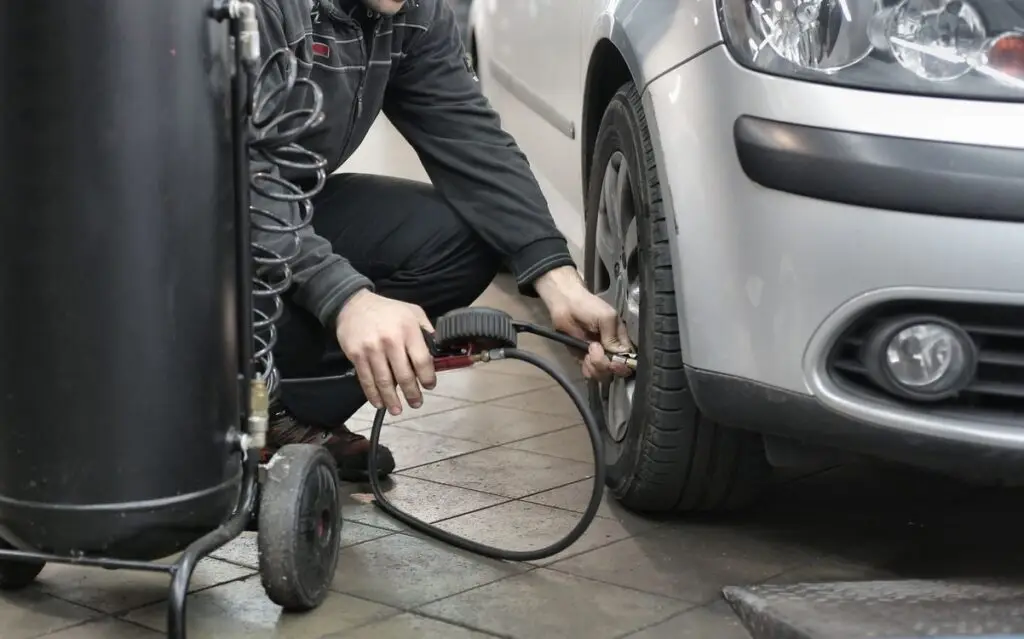
Real stock photograph illustrating tire care, not a test of these three pumps. Photo source.
Quick shortlist
The DEWALT is worth considering when removable tool-battery power and other power options matter. The Fanttik and AstroAI are compact rechargeable examples to compare when you want a self-contained pump.
Check the manufacturer’s suitable tire sizes and operating limits. A high maximum PSI rating does not tell you how quickly a pump will add air to a large tire or how long it can run.
DEWALT DCC020IB
DEWALT lists this inflator with three supported power sources: a compatible 20V MAX battery, vehicle 12V DC and the appropriate AC supply. It has a pressure setting and auto-shutoff. Its removable-battery arrangement may be useful if you already use compatible DEWALT batteries.
The DCC020IB is a tool-only model. Check the package rather than assuming a battery, charger or AC adapter is included. It is a different ownership proposition from a small rechargeable pump: the parts you already own can change the complete cost.
Fanttik X8 APEX
The X8 APEX is a compact cordless inflator with preset modes, a display and automatic stopping at the selected pressure. Its self-contained format suits readers looking for a pump they can carry without a separate tool battery.
Read the current charging instructions, tire-size limits and package list. Treat advertised inflation times as claims made under stated conditions; a larger tire, lower starting pressure or different temperature can change the result.
AstroAI L7
The L7 is another compact rechargeable example with a pressure display and lighting features described on its official page. Compare its controls, charging arrangement and suitable tire sizes with the Fanttik.
The useful question is whether it fits your normal pressure checks. Compact pumps have limits, and a rechargeable unit needs charge available when you need it. Check the manufacturer’s cooling and storage instructions rather than assuming unlimited runtime.
What a useful comparison includes
For a fair speed comparison, look for the same tire size, starting pressure and target pressure. A quick top-up claim is not the same as filling a completely empty tire.
Make a comparison note that records the tire size, intended pressure top-up, power arrangement and package you are considering. A pump supplied without a removable battery is a different purchase from a rechargeable unit with its power source built in. Compare the cost of a working setup, including any required charger or adapter, rather than comparing only the device price.
Think about the routine between uses as well. Identify where the inflator will be stored, how you will check its charge or connect power and which instructions apply to charging and cooling. Portability is useful only if the equipment is ready when you need it.
For a corded pump, check that the connector and cable reach your tires and match the vehicle’s power requirements. For a rechargeable pump, check charging time, storage conditions and how you will recharge it on a trip.
Choose around a routine you can maintain. Identify how you will provide power, reach each tire and verify the result. Check the exact package for the connectors and accessories needed for that arrangement. A pump that suits one charging routine or storage space may be inconvenient for another, even when the advertised pressure rating is similar.
Add missing batteries, chargers or adapters to the price. Also consider the valve connection, hose reach, readability, returns and support. Presets and auto-stop are convenient, but an independent pressure check is still useful.
Read advertised inflation times alongside the conditions stated by the source. The useful comparison identifies the same tire, starting pressure, target pressure and power supply. If those conditions differ or are missing, treat the figures as separate examples rather than a measured ranking of the three products.
When checking a retailer bundle, look for the valve connector, hose, charging cable and any power accessories you expect to use. Confirm the exact model and package against the manufacturer’s current documentation. For further reading, browse our tire inflator articles and the broader buying checklist.
Use the vehicle's target pressure
NHTSA recommends using the vehicle manufacturer’s cold-tire pressure shown on the placard or in the owner’s manual. The maximum printed on the tire sidewall is not the everyday target for your car.
A pump cannot repair a puncture or damaged tire. Stop and get suitable assistance if the tire will not hold air or has visible damage. Read the inflator manual and observe its operating and cooling limits.
Common questions
Can an inflator repair a flat tire?
It adds air; it does not repair damage or a leak. A tire that loses pressure needs the cause checked.
Is auto-stop a replacement for a gauge?
Use auto-stop for convenience, then verify the pressure with a suitable gauge and the vehicle’s cold-tire target.
Does a 150 PSI rating mean the pump is best for a truck?
No. Maximum pressure alone does not establish airflow, duty cycle or suitable tire size.
Should I choose cordless or vehicle-powered?
Choose by the power you can reliably provide. Rechargeable models need battery care; vehicle-powered models need the correct socket or connection and enough cable reach.
Sources and how this comparison was prepared
We checked the manufacturer pages and relevant instructions linked below. Fit suggestions are our interpretation of those features, not measured test rankings. Confirm the current version and package before purchase.